



Ask three people on your staff what time your Christmas Eve services start this year. If you get three different answers, or three shrugs, you've found the decision that's going to cost your team its December.
Christmas Eve falls on a Thursday in 2026. Last year it was a Wednesday, so last year's schedule doesn't transfer. The times everyone is quietly assuming are already wrong.
September has two Christmas decisions in it. One is your theme, which sets how the season looks. The other is your service times, which set what almost every piece of it says. The theme usually gets a meeting on the calendar. The times get assumed until somebody needs them for the printer.
Everything That Carries a Time Waits on This
Count how much of what your church makes for Christmas has a time printed on it. The invite cards, the website banner, your Google listing, the social graphics, any ads you run, the lobby signage, the bulletin, and the kids check-in plan that tells a volunteer when to show up. Almost all of it.
The moment it becomes your problem is small and specific. Somebody opens the file to start the invite card, gets to the line where the time goes, and stops. Then they message you to ask, and you don't know either.

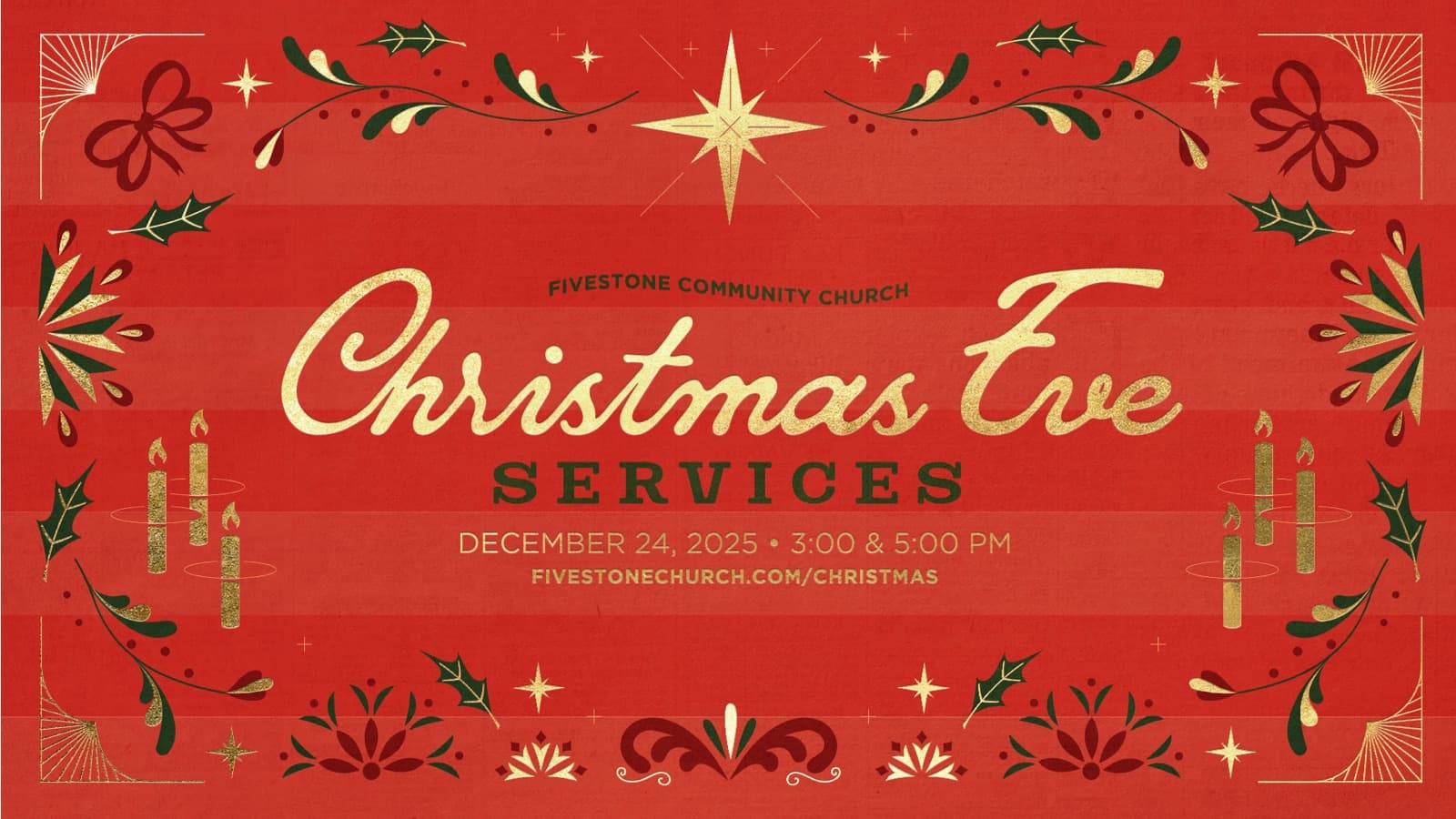
None of that can be designed until the times exist, and none of it can be printed until it's designed. Every week the decision sits open is a week your designer and your printer never get back. Those are the two people with the least room in December.
Worse is the version where nobody notices anything is wrong. Last year's times are the only numbers anybody has, so the cards get designed with those and sent to the printer. The correction arrives in the first week of December. A thousand invite cards with the wrong time on them is a print run you paid for and can't hand to anybody.

Why Thursday Changes Your December
A Thursday Christmas Eve reshapes the week around it, and it changes three other dates on your December calendar.
December 25 is a Friday this year, so families travel Friday into the weekend. That makes December 20 your last real invite Sunday, four days out. A card handed to someone on the 20th is a reminder rather than an invitation, so the actual inviting has to happen weeks before that.
The Sunday after Christmas is December 27, and most churches staff that morning differently. Decide now whether it's a normal Sunday, one combined service, or something lighter, and tell your volunteer coordinator in the same conversation. If you run a midweek program, December 23 is a Wednesday, so you're also deciding whether that night happens at all.
There's good news in the shape of this year. December 20 is a full Sunday with nothing competing for it, which gives you a normal weekend and four clear days before Christmas Eve. Churches with a Sunday Christmas Eve don't get either one.
You'll be at every one of these services, so count them honestly before anybody adds a fourth.
What the Decision Actually Contains
Setting the times sounds like one line on an agenda. It's really seven answers, and your graphics can't start until you have all of them.
- How many Christmas Eve services you're running, and what time each one starts.
- Which services include childcare or kids programming. Every one you promise is a volunteer team your kids director has to recruit.
- Which service is candlelight, if they aren't all candlelight.
- What time the doors open. That's the number guests ask about when they call.
- Whether December 20 runs on your normal Sunday schedule or on a Christmas one.
- What happens on December 27, and who's covering it.
- Who is confirming that your volunteer teams can staff every service you just put on the list.
Write the answers down in one place, put the date on it, and hand that document to whoever makes your media the day it's finished.
Decide It Even When a Detail Is Still Open
This decision almost always stalls on one unknown. You don't know yet whether you can staff a third service, or the building has a conflict on the 23rd, or someone in leadership isn't sure they'll be in town.
Decide the times anyway. Then write down the one thing that could move them, who's confirming it, and by when. Your designer can start on a time that has a note attached, and they can revise a finished graphic in an afternoon. Nobody can start on a blank.
Who Decides and Who Gets Told the Same Day
The times are a leadership call, usually the lead pastor with whoever runs operations and volunteers. If your church has a habit of reopening settled decisions in December, the view, voice, vote, and veto approach we use for the theme meeting works just as well here. Say out loud who has the final call before anybody starts floating options.
Plenty of people need these times without getting to set them. If that's you, take the seven questions to your next staff meeting and ask for a decision in the meeting rather than a conversation about it. A list of specific questions is much harder to defer than a general reminder that Christmas is coming.
Then the answer goes out the same day, and to more people than most teams expect. It goes to your media team, your website person, your printer, your kids director, your volunteer coordinator, and the person who answers the phone when a guest calls to ask. One of them finding out three weeks late is how a wrong time ends up somewhere public.
Work the Dates Backward From December 24
Twelve weeks from the first of October is Christmas Eve, so the runway is real without being generous. Every date below has an owner. A milestone nobody owns is a milestone that moves.
- Before October: the times are decided, written down, and handed to whoever makes your media. Leadership owns this one.
- October: series graphics and every piece that carries a time gets designed. Your comms owner runs it, and it's the busiest month of the season.
- Late October: invite cards and printed pieces go to the printer. You want them in hand before your people start making December plans.
- November 15 and November 22: the two Sundays before Thanksgiving, when families settle what they're doing at Christmas. Cards need to be in hands, not in a box in the office.
- First week of December: everything physical that's left goes to the printer. Banners, signage, anything that has to hang somewhere.
- December 20: the last Sunday before Christmas Eve, and your final ask from the platform.
The times are the cheapest decision in your Christmas plan and the most expensive one to change late.
If it's the middle of September and none of this is settled, you haven't lost the season. Twelve weeks is a genuine runway, and you've run harder Decembers than this one. What makes this slip is never that your team didn't care about Christmas. It's that nobody owns a decision which doesn't feel urgent until it's expensive.
December 24 is the night somebody who hasn't walked into a church in years walks into yours. They find the time on a card a friend handed them, or on your website at eleven at night. Settling it in September is how your team gets to be in the room with them instead of still working.
Put the meeting on the calendar this week, with the seven questions on the agenda and the people who can answer them in the room. One decision unblocks two months of work.
Christmas playbook · 2026 edition
Want the whole season planned out?
We put the plan we use with churches into a twelve-page playbook, worked backward from Christmas Eve. You’ll get the four decisions to settle in September, one church’s complete deliverables list, and a worksheet for writing your own. It costs an email address and nothing else.


Published by Church Media Squad on September 8, 2026.